Perspective in photography can transform an ordinary image into a captivating work of art. It dictates how viewers perceive the subject, guiding the emotional and visual impact of the photograph. Understanding the importance of perspective allows photographers to convey depth, tell stories, and create connections with their audience.
The angle, distance, and framing of a shot can enhance textures, shapes, and colours, revealing new dimensions that may go unnoticed at first glance. By experimenting with perspective, photographers can emphasise certain elements while downplaying others, effectively guiding the viewer’s focus. This ability to manipulate perception elevates photography from mere documentation to a powerful means of expression.
As photographers refine their skills, they often discover that changing their viewpoint can lead to more dynamic imagery. Embracing diverse perspectives not only enriches their portfolio but also encourages creativity and innovation in their craft. A keen awareness of perspective is essential for anyone wanting to elevate their photography game.
Understanding Perspective in Photography
Perspective plays a crucial role in photography, as it defines how elements within a scene relate to one another. By manipulating perspective, a photographer can create compositions that evoke emotion, enhance storytelling, and provide a sense of scale and depth.
Types of Perspective
There are several types of perspective that photographers can utilise. Linear perspective involves the convergence of parallel lines towards a vanishing point, which can guide the viewer’s eye and create a sense of depth. Aerial perspective refers to how atmospheric conditions can affect the colour and contrast of objects, causing distant elements to appear lighter and less defined.
Another important type is forced perspective, where the placement of subjects in the foreground or background alters their apparent size. This technique is often used in creative photography to achieve impressive visual effects.
Creating Depth and Dimension
To create depth and dimension, a photographer can incorporate elements from the foreground, middle ground, and background. By capturing layers within a scene, one can establish a three-dimensional feel in a two-dimensional medium. Using leading lines that draw the viewer into the photograph can also enhance depth.
Additionally, depth of field is a vital element. A shallow depth of field blurs the background, isolating the subject and drawing attention to it. Conversely, a deeper depth of field keeps the background in focus, allowing the viewer to absorb more of the scene’s context.
The Impact of Lens Choice on Perspective
Lens choice significantly affects perspective and composition. Wide-angle lenses create a broader view, which can exaggerate the size of foreground objects while compressing the background. This effect is useful for landscapes or architectural photography, where capturing more of the scene is desirable.
In contrast, telephoto lenses compress space, making distant objects appear closer together. This can enhance the detail and focus on specific subjects, often important in portrait photography. Using a prime lens with a fixed focal length may also yield sharper images and better control over depth of field, allowing a photographer to manipulate perspective more precisely.
Compositional Techniques to Enhance Perspective
Effective perspective in photography can be achieved through various compositional techniques. These methods include using leading lines, exploring different angles, and applying rules such as the rule of thirds to create depth and interest.
Employing Leading Lines and Vanishing Points
Leading lines draw the viewer’s eye through the photograph, guiding them towards a focal point. They can be natural elements like paths, rivers, or man-made structures such as roads and fences.
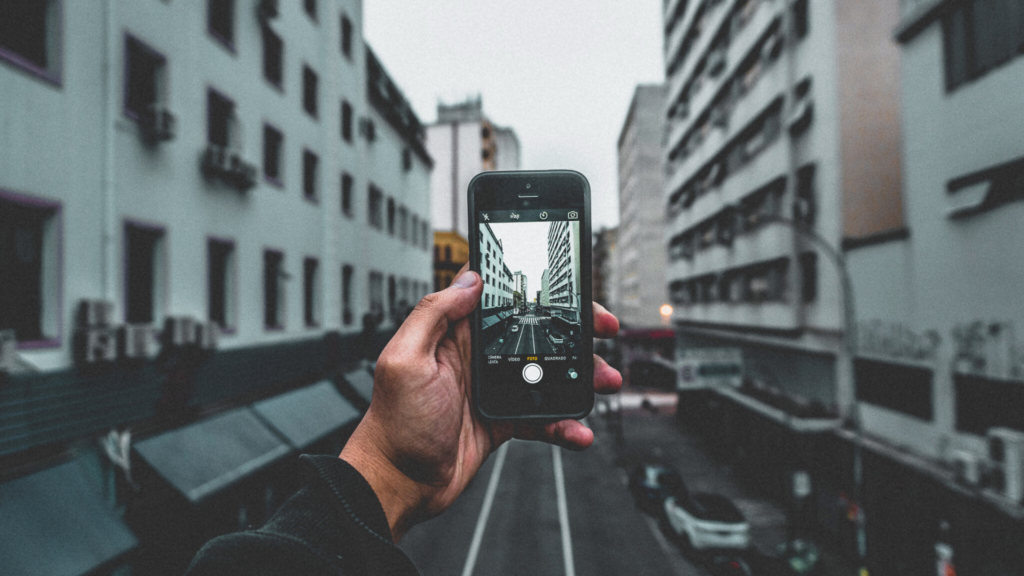
Incorporating vanishing points enhances depth. A vanishing point occurs where parallel lines converge, creating the illusion of distance. For instance, a long road disappearing into the horizon can be powerful. Together, these techniques establish a compelling sense of perspective and encourage viewers to explore the image.
Exploring Angles and Vantage Points
The choice of angle is crucial for presenting a unique perspective. Low angles can make subjects appear more imposing, while high angles—such as a bird’s-eye view—can provide a comprehensive overview of the scene.
Vantage points also influence how depth is perceived. Shooting from an elevated position allows for greater visibility of layers within the scene. Experimenting with various angles helps create dynamic compositions that evoke emotion and interest.
Leveraging the Rule of Thirds and Focal Points
The rule of thirds is a fundamental guideline in photography. Dividing the frame into thirds—both horizontally and vertically—creates intersecting points of interest. Placing important elements at these intersections enhances the engagement and balance in the image.
Focal points, whether they are human figures, architecture, or nature, strengthen the composition. They should draw attention amidst the background. The rule of thirds can be effectively utilised to position these focal points, ensuring that the overall composition feels harmonious and engaging.
Perspective in Different Photography Genres
Photography benefits from varying perspectives, which significantly influence composition and storytelling. Each genre employs unique techniques to manipulate depth, space, and visual relationships between subjects.
Landscape Photography and the Illusion of Depth
Landscape photography often relies on perspective to create an illusion of depth. Photographers strategically place foreground elements, such as rocks or plants, which guide the viewer’s eye through the image. This layering enhances the three-dimensionality of the scene.
Using a wide-angle lens can also exaggerate the perceived distance between objects. When capturing vast landscapes, such as mountains or valleys, careful consideration of lines—like roads or rivers—leads to more dynamic compositions. By integrating these elements, landscape photographers achieve a compelling sense of space and scale.
Street Photography and Layers of Perspective
In street photography, perspective is crucial in capturing the essence of urban environments. Photographers often utilise layers to create rich narratives. By including various subjects in different planes, they can showcase interactions and relationships within the bustling atmosphere.
Overlap perspective plays a vital role here. When subjects intersect, it adds depth, encouraging viewers to explore the image more closely. Street photographers frequently experiment with angle and positioning, helping to convey emotion and human experience in a single frame.
Architectural Photography and Perspective Distortion
Architectural photography frequently deals with perspective distortion, especially when shooting tall buildings. To accurately represent structures, photographers often correct convergence issues that arise when vertical lines appear to tilt inward. This practice maintains the integrity of architectural forms.
In addition, the relationship between objects is essential for effective composition. Integrating surrounding elements, such as people or trees, provides context for the building’s scale. Photographers need to consider vantage points carefully, experimenting with angles to capture the desired architectural features and their spatial relationships.