The world of digital art has undergone significant transformations since its inception. Artists have continuously adapted to new technologies, creating innovative tools that enhance their craft. The evolution of digital art tools and techniques has expanded artistic possibilities, making it easier for creators to express their visions and connect with audiences.
As digital platforms have matured, so have the methods artists use to create. From early graphic software to advanced applications that incorporate artificial intelligence, each advance has shaped how digital art is produced and appreciated. This ongoing evolution reflects not only technological progress but also a deeper understanding of artistic expression in the digital realm.
Today, digital art is not merely a replication of traditional methods but a distinct form with its own techniques and tools. As artists explore these resources, they unlock new depths of creativity, allowing for vibrant and complex works that resonate with viewers.
Historical Context and Technological Change
Digital art has transformed significantly from its traditional roots. The progression from classic methods to advanced digital platforms illustrates the profound impact of technology on creative practices.
From Traditional to Digital Art
Traditional art has long relied on physical mediums, including paint, canvas, and sculpture. Artists developed skills in techniques like oil painting and drawing, which shaped their understanding of form, colour, and texture.
With the rise of digital art, many artists began adapting their skills to computer-based environments. The software allowed the reproduction of traditional techniques while introducing new possibilities. This shift marked the beginning of a merging landscape, where artistry combined with technology to create innovative forms of expression.
Emergence of Digital Tools and Software
The introduction of digital tools revolutionised how artists create and share their work. Early digital art programs, such as Adobe Photoshop and Corel Painter, provided essential functions like layering and undo options, enhancing creativity and experimentation.
As digital tools evolved, artists gained access to a richly diverse range of software. From vector graphics programs like Adobe Illustrator to 3D modelling software, each new tool contributed to expanding artists’ capabilities. Artists could manipulate digital images with uncanny precision, fostering a new era in visual communication. However, this has generated demand for powerful computing systems, especially when it comes to handling difficult 3D projects. The rendering process for high quality animations and modeling can be intensive and may require using solutions to generate a blender render farm, or similar options for different tools. This frees up the artist’s personal machine for other tasks and speeds up their workflow, allowing them to complete projects faster.
The Influence of Technological Advancements
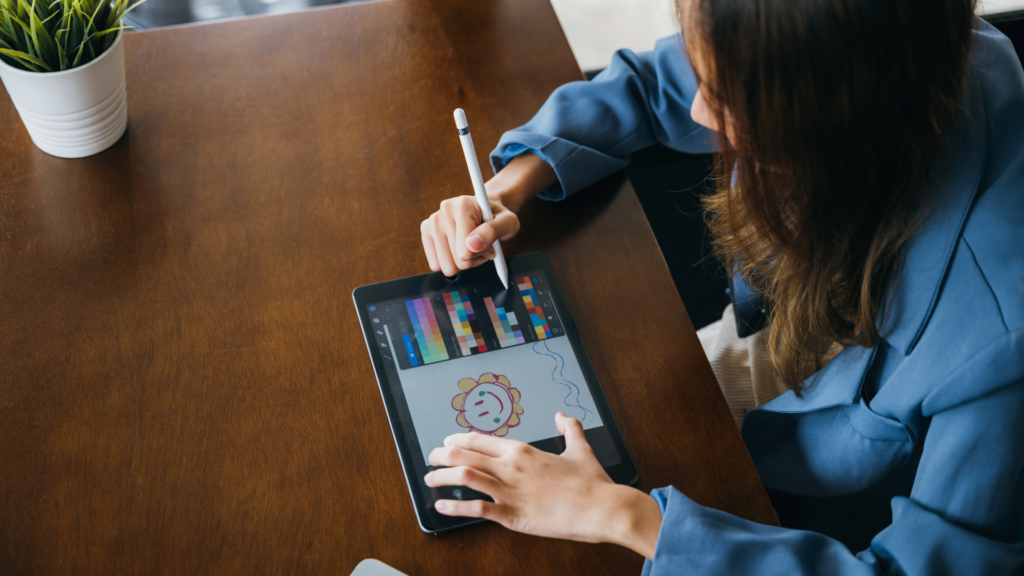
Technological advancements have continuously shaped digital art practices. The development of graphic tablets and styluses established a direct connection between the artist’s hand and digital canvas. This development mirrored traditional techniques while offering new features.
Additionally, innovations such as augmented reality (AR) and virtual reality (VR) have changed how audiences engage with digital art. Artists can now create immersive environments, allowing viewers to experience art beyond static images. As technology continues to progress, the complexity and depth of digital art will likely expand, unearthing new creative opportunities.
Fundamentals of Digital Art Creation
Digital art requires a solid grasp of essential techniques and tools. Key components include understanding layers, the role of software, and the concepts of algorithmic and generative art. Mastery of these fundamentals can greatly enhance an artist’s workflow and creative expression.
Understanding Layers and Inking
Layers are a foundational aspect of digital art, allowing artists to separate different elements within a single composition. This can include backgrounds, characters, and effects, providing flexibility for modifications without altering the entire image.
Inking is crucial for defining contours and adding depth. Artists often use varying brush settings within programs like Adobe Photoshop to achieve line quality. This technique can produce smooth, precise lines or textured effects, depending on the chosen brush.
The use of layers also aids in non-destructive editing. Artists can adjust blend modes and opacities to experiment with colour and lighting. Mastery of layers and inking techniques can significantly impact the final artwork.
The Role of Software in Digital Artistry
The choice of software determines the artist’s capabilities. Popular programs such as Adobe Photoshop and Corel Painter offer diverse tools for painting, drawing, and photo editing.
Photoshop is particularly favoured for its comprehensive suite of brushes, allowing artists to mimic traditional techniques digitally. The software supports large canvases and high-resolution files, essential for professional-grade work.
Furthermore, learning various shortcuts and features within the software can speed up the workflow. Utilising tool presets and customisable shortcuts enhances efficiency and can inspire creativity.
Exploring Algorithmic and Generative Art
Algorithmic art relies on mathematical principles and coding to create images. This approach can produce intricate patterns and structures, often beyond the human capacity to design manually.
Generative art, a subset of algorithmic art, emphasises the use of autonomous systems. Artists write algorithms that execute random variations, providing endless possibilities. Tools like Processing and p5.js facilitate these creative endeavours.
By integrating programming with artistic vision, creators can push the boundaries of digital art. This fusion represents a rapidly evolving field, expanding the definition of creativity in digital spaces.
The Rise of Artificial Intelligence in Art
Artificial intelligence is transforming the landscape of digital art. By enhancing creative exploration and introducing innovative tools, it opens new avenues for artists and creators.
AI Tools and Their Capabilities
A variety of AI tools are reshaping how artists create. Applications like DALL-E allow users to generate images from textual descriptions. This capability enables artists to brainstorm and visualise concepts quickly.
These tools are not just limited to image generation. They also assist in editing, enhancing, and even suggesting stylistic changes based on user preferences. AI analyses vast datasets to provide recommendations, which can lead to unexpected creative outcomes.
Furthermore, artists can experiment with different styles and techniques without lengthy manual processes. This democratisation of art creation encourages more individuals to explore their artistic potential.
Generative Adversarial Networks (GANs)
Generative Adversarial Networks (GANs) are a groundbreaking technology in AI art. GANs consist of two neural networks: a generator and a discriminator. The generator creates images, while the discriminator evaluates them for authenticity.
This dynamic fosters continuous improvement, pushing the boundaries of what is possible in digital art. Artists can produce hyper-realistic images or entirely new visual styles by training GANs on specific datasets.
The use of GANs also allows for unique collaborations between technology and artists. They can explore themes and styles that may not align with traditional methods. As a result, GANs facilitate innovation, driving the evolution of contemporary art practices.
Technique, Patience, and Creativity
Digital art requires a harmonious blend of technique, patience, and creativity. Mastery of tools such as Adobe Illustrator plays a crucial role, alongside the artist’s willingness to experiment and grow.
The Complexity of Digital Techniques
Digital art techniques encompass a wide range of skills, from vector manipulation in Adobe Illustrator to pixel art creation. Each technique has its own set of functions and workflows that artists must learn to navigate effectively.
For instance, creating a smooth gradient in Illustrator requires an understanding of the gradient tool and layering. Techniques like masking or using blend modes can add depth and complexity, allowing artists to elevate their work beyond basic designs.
Consider skills such as digital painting, where brush settings significantly impact the artwork. Artists experimenting with different brushes can achieve unique textures that enhance their creative expression.
Balancing Artistry with Technical Skill
A successful digital artist balances creativity with technical prowess. Mastery of tools does not overshadow the importance of personal style; rather, it complements and enriches it.
Artists should focus not only on learning the technical aspects but also on developing their unique voice within their art. This is where experimentation plays a vital role, as trying new techniques leads to the discovery of individual strengths.
A well-rounded artist integrates their understanding of software functions with innovative concepts, pushing the boundaries of what digital art can achieve. The combination of technique and individual creativity is key to producing compelling work.
Cultivating Patience and Appreciation in the Digital Sphere
Patience is essential in the journey of mastering digital art. Creating high-quality artwork often involves multiple iterations, and artists must be willing to refine their pieces meticulously.
This process fosters an appreciation for gradual improvement. As artists engage with tools and techniques, they develop a stronger sense of what works and what does not.
Embracing the learning curve associated with software like Adobe Illustrator encourages growth. Over time, this patience helps artists achieve more complex compositions, resulting in greater satisfaction in their creative endeavours.