
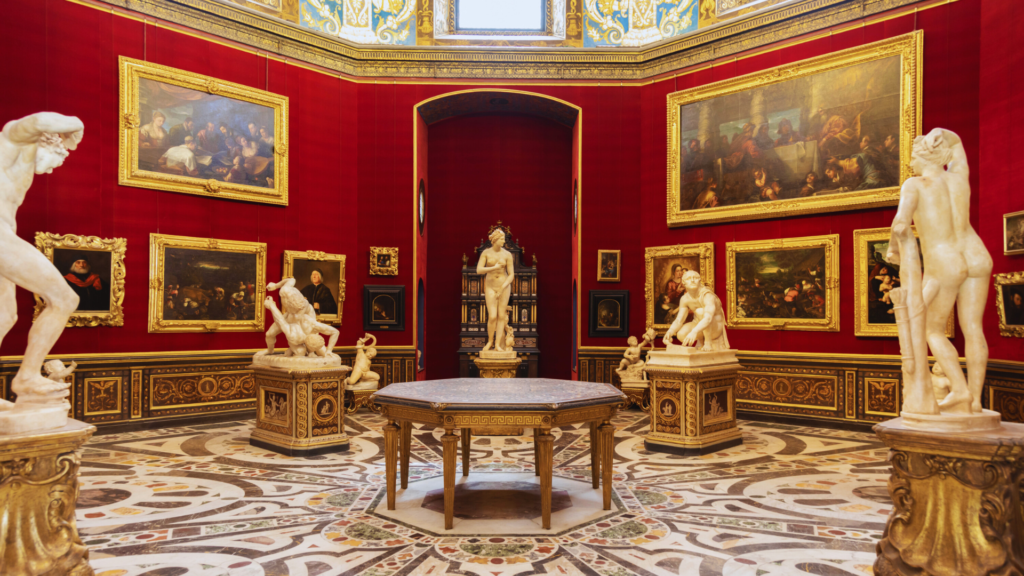
The history of art reflects the evolving nature of human expression and culture. From prehistoric cave paintings to contemporary installations, art serves as a visual narrative that encompasses the values, beliefs, and experiences of society. Each period of artistic development reveals a unique perspective on the world and highlights the ways in which visual culture both shapes and is shaped by historical context.
Throughout history, art has been a powerful medium for communication, allowing artists to convey complex ideas and emotions through visual means. The transition from classical forms of art to more abstract expressions illustrates the shifting paradigms in thought and creativity. This journey through different styles and movements not only showcases artistic innovation but also provides insight into the societal changes that inspired them.
As art continues to evolve in today’s global society, understanding its rich history becomes essential for appreciating the diverse range of visual art forms available. An exploration of these historical milestones unveils a tapestry of influences that resonate within the contemporary art scene, inviting further examination of what art signifies in the modern world.
Origins and Historical Development
The origins of art are deeply rooted in human history, evolving from basic expressions of existence to complex forms of cultural identity. Throughout various periods, art has reflected society’s values, beliefs, and technological advancements.
Prehistoric to Ancient Art
Prehistoric art primarily consists of cave paintings, found in sites like Lascaux and Chauvet in France. These early expressions mostly depict animals and human figures, showcasing a connection to hunting and survival.
As societies advanced, art began to serve more functions. Egyptian art, for example, reflected religious beliefs and social hierarchy. Hieroglyphics and elaborate tomb paintings demonstrated a desire for immortality and depicted deities and pharaohs.
The art of ancient civilisations like Mesopotamia and the Indus Valley also laid the groundwork for later developments, with pottery, sculptures, and architectural achievements.
Classical and Medieval Periods
The Classical period introduced notable advancements in realism and technique, particularly in Greek and Roman art. Greek sculptures, such as those by Phidias and Praxiteles, emphasised human form and proportion.
The subsequent Medieval period saw a shift towards religious themes. Byzantine art was characterised by mosaics and iconography, focusing on spirituality rather than realism. In contrast, Gothic art introduced features like pointed arches and stained glass, reflecting a burgeoning interest in light and dramatic storytelling.
Art became a crucial element of architecture, as seen in the grand cathedrals that adorned European cities. This era marked a transition from secular to sacred themes.
Renaissance to Baroque
The Renaissance sparked a revival of Classical ideals and humanism. Artists like Michelangelo and Leonardo da Vinci explored anatomy, perspective, and individuality in their works. The period was marked by a flourishing of creativity and innovation in painting and sculpture.
Following this, the Baroque period emerged, characterised by a dramatic use of light and shadow. Artists such as Caravaggio and Bernini focused on emotional intensity and movement. This era resulted in grand, elaborate compositions that often evoked a sense of awe and grandeur.
Art not only represented the human experience but also engaged with evolving cultural, religious, and political contexts during this dynamic period in history.
Art from the 18th to Early 20th Century
This period witnessed a significant evolution in artistic styles and movements, marked by a reaction to the previous eras and an exploration of new themes and techniques. Key movements included Neoclassicism, Romanticism, Realism, and Modernism, each contributing uniquely to the art world.
Neoclassicism to Romanticism
Neoclassicism emerged in the mid-18th century as a response to the ornate Rococo style. Artists sought inspiration from classical antiquity, emphasising order, symmetry, and idealised forms. Prominent figures included Jacques-Louis David, whose works reflected moral virtues.
As the 19th century progressed, Romanticism arose, prioritising emotion and individualism. Artists like Eugène Delacroix and J.M.W. Turner explored passion, nature, and the sublime, often depicting dramatic scenes and bold colour palettes. This movement marked a shift towards personal expression and a focus on the human experience.
Realism to Post-Impressionism
Realism developed in the mid-19th century as an attempt to depict everyday life without embellishment. Artists like Gustave Courbet focused on ordinary subjects, highlighting social issues. This movement paved the way for Impressionism, which emerged in the 1870s.
Impressionists, including Claude Monet, captured fleeting moments through light and colour. Their works featured loose brushwork and an emphasis on atmosphere rather than precise detail. Following this, Post-Impressionism diversified the movement, with artists like Vincent van Gogh and Paul Cézanne introducing emotional depth and structure, respectively.
Modernism and Its Movements
Modernism began in the late 19th century and unfolded throughout the 20th century, characterised by a break from tradition. This period fostered various movements such as Art Nouveau and Art Deco.
Art Nouveau embraced organic forms and intricate designs, with artists like Alphonse Mucha leading the way. In contrast, Art Deco, emerging in the 1920s, celebrated geometric shapes and glamour, reflecting technological advancements. Modernism continually challenged conventions, with artists experimenting with abstraction and new materials, shaping the trajectory of contemporary art.
Mid-20th Century to Contemporary Art
The period from the mid-20th century to contemporary art is marked by a range of influential movements and styles, reflecting social changes and advancements in artistic expression. This era particularly highlights the transition from abstract aesthetics to the visual culture of modern life.
Abstract Expressionism to Pop Art
Abstract Expressionism emerged in the 1940s and 1950s, championing spontaneity and emotional intensity. Artists like Jackson Pollock and Mark Rothko focused on the act of painting itself, using vibrant colours and bold strokes to convey inner feelings.
In the 1960s, Pop Art arose as a counter-movement, incorporating imagery from popular culture. Artists such as Andy Warhol and Roy Lichtenstein drew inspiration from advertising and comic strips, challenging the traditional boundaries of fine art. This fusion of high and low culture reshaped artistic narratives and expanded the definition of art.
Postmodernism and Beyond
Postmodernism exploded in the late 20th century, characterised by a questioning of established narratives and styles. Artists began to blend various mediums and genres, often incorporating irony and parody.
The rise of performance art, notably by figures like Marina Abramović, redefined the audience’s role and the nature of artistic experience. Contemporary art has continued to evolve, with diverse practices that incorporate digital technology, installation, and immersive experiences, reflecting the complexities of modern society and identity.
The Academic and Cultural Context
The academic and cultural context of art history encompasses the structured study of art alongside the evolution of art collections and museums. Influential figures and institutions have played a significant role in shaping the discipline while reflecting broader cultural narratives.
Study and Documentation
The study of art has evolved through various academic approaches and methodologies. In the 18th century, Johann Joachim Winckelmann was pivotal in establishing art history as a scholarly discipline. He emphasised the importance of the chronology of art, linking specific styles and movements to historical events.
Essays and critiques emerged as key forms of documentation. They provided insights into artistic intent and societal impact. Different schools of thought, including formalism and iconography, further refined art analysis. Today, interdisciplinary approaches integrate insights from history, anthropology, and sociology into art studies.
Collection and Museology
Museums have been central to the collection and exhibition of art. They not only preserve artworks but also play a vital role in art education and public engagement. The emergence of museology has transformed how collections are curated.
Historically, museums reflect cultural values and priorities. They have evolved from private collections to public institutions, making art accessible to a wider audience. The focus on collection management involves careful documentation and conservation practices. This ensures that artworks retain their historical and cultural significance while fostering appreciation for diverse artistic expressions.